
The history of blacksmithing in Canada follows the pattern of European settlement: smiths arrived with each wave of colonists, established forges in trading posts and garrison towns, and served the practical needs of communities that could not afford to wait months for imported iron goods. By the time railways crossed the country in the 1880s, every town of any size had at least one working smith. The railway itself, paradoxically, both sustained rural smithies — by making coal reliably available — and began their eventual decline by cheapening mass-produced iron hardware.
New France and the Atlantic Colonies
French colonial records from the seventeenth and eighteenth centuries document ironworking establishments at Quebec City, Trois-Rivières, and the St. Maurice ironworks (Les Forges du Saint-Maurice), which operated near Trois-Rivières from 1730 until 1883, making it one of the longest-continuously-operating iron-producing sites in North American history. The St. Maurice forges produced cast iron stoves, cannon shot, and hardware for the colonial administration and private trade. The site is now Parks Canada's Forges du Saint-Maurice National Historic Site.
In the Atlantic colonies — Nova Scotia, Prince Edward Island, and New Brunswick — small independent smithies operated from the mid-eighteenth century, serving fishing communities and agricultural settlements. Iron for these shops was largely imported from Britain until domestic foundries became established in the nineteenth century.
The Prairies: Town Smiths and Itinerant Workers
Prairie settlement in the decades after Confederation (1867) created intense demand for blacksmithing services. Homesteaders arrived with wagons, ploughs, harrows, and harness hardware that required constant repair. A single hard season of breaking new land could shatter plough shares, bend cultivator teeth, and split wagon wheel rims beyond field repair.

Town blacksmiths on the Prairies typically combined general ironwork with horseshoeing (farriery), wheel-setting, and wagon repair. The forge was often one of the first commercial structures in a new town, located near the livery stable and grain elevator. The Lacombe Blacksmith Shop in Lacombe, Alberta — documented in the Provincial Archives and visible as a heritage structure — is a preserved example of this type of Prairie establishment.
Itinerant smiths travelled between smaller settlements that could not sustain a permanent forge, arriving seasonally with portable equipment — a light anvil, a leather bellows, a small fire pot — and working through a backlog of repairs before moving on. This pattern persisted in remote areas well into the twentieth century.
British Columbia: Mining Towns and the Gold Rush
The Fraser River Gold Rush of 1858 and the Cariboo Gold Rush of the 1860s brought rapid population growth to the BC interior. Mining camps required picks, ore carts, windlass hardware, and blasting rod sharpening — all blacksmith work. Barkerville, the largest settlement in the Cariboo, had several operating forges at its peak.
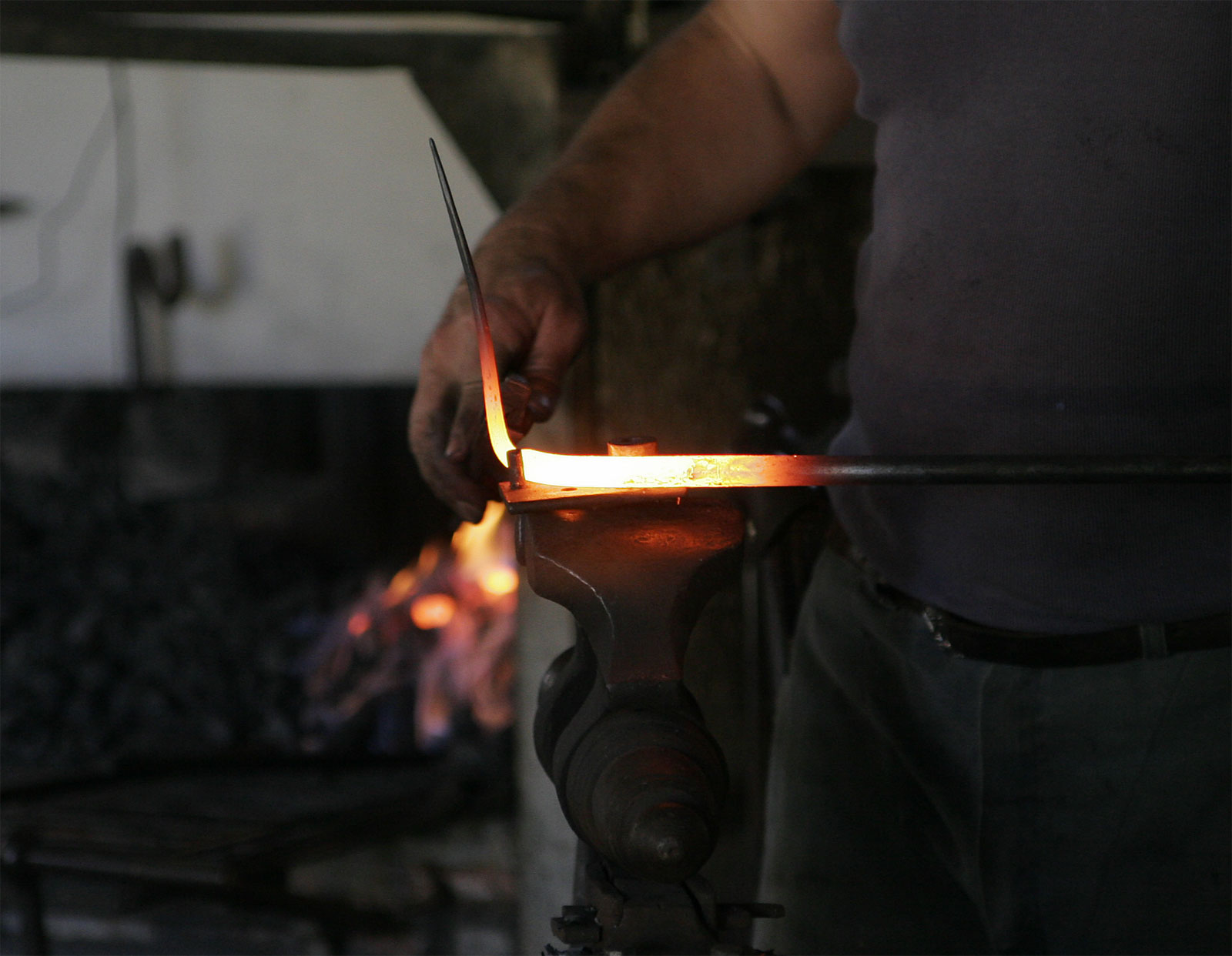
Barkerville Historic Town, administered by BC Heritage, preserves and interprets this period. The site's blacksmith shop offers working demonstrations using period equipment — one of the few places in Canada where the full sequence of fire, hammer, and anvil can be observed as a continuous craft process rather than as static display.
Industrial Displacement and Survival
The blacksmith's trade began contracting in the early twentieth century as factory-produced agricultural hardware became cheaper and more available. The internal combustion engine eliminated the horse — and horseshoeing — as central occupations. Welding with oxyacetylene and later electric arc replaced fire-welding for most repair work by the 1920s and 30s.
What survived was specialised: ornamental ironwork, tool and knife making, and farriery (which remains a licensed trade in most Canadian provinces). The Canadian blacksmithing community today is represented by organisations including the Artist Blacksmith Association of North America (ABANA) and its affiliated Canadian chapters, which support both craft and artistic ironwork.
Heritage preservation: Parks Canada identifies blacksmith shops and forges as significant industrial heritage structures. The Canadian Conservation Institute has published guidance on the conservation of historic iron objects, including forge equipment, that informs museum and heritage site practice across the country.
The Statue in Guelph
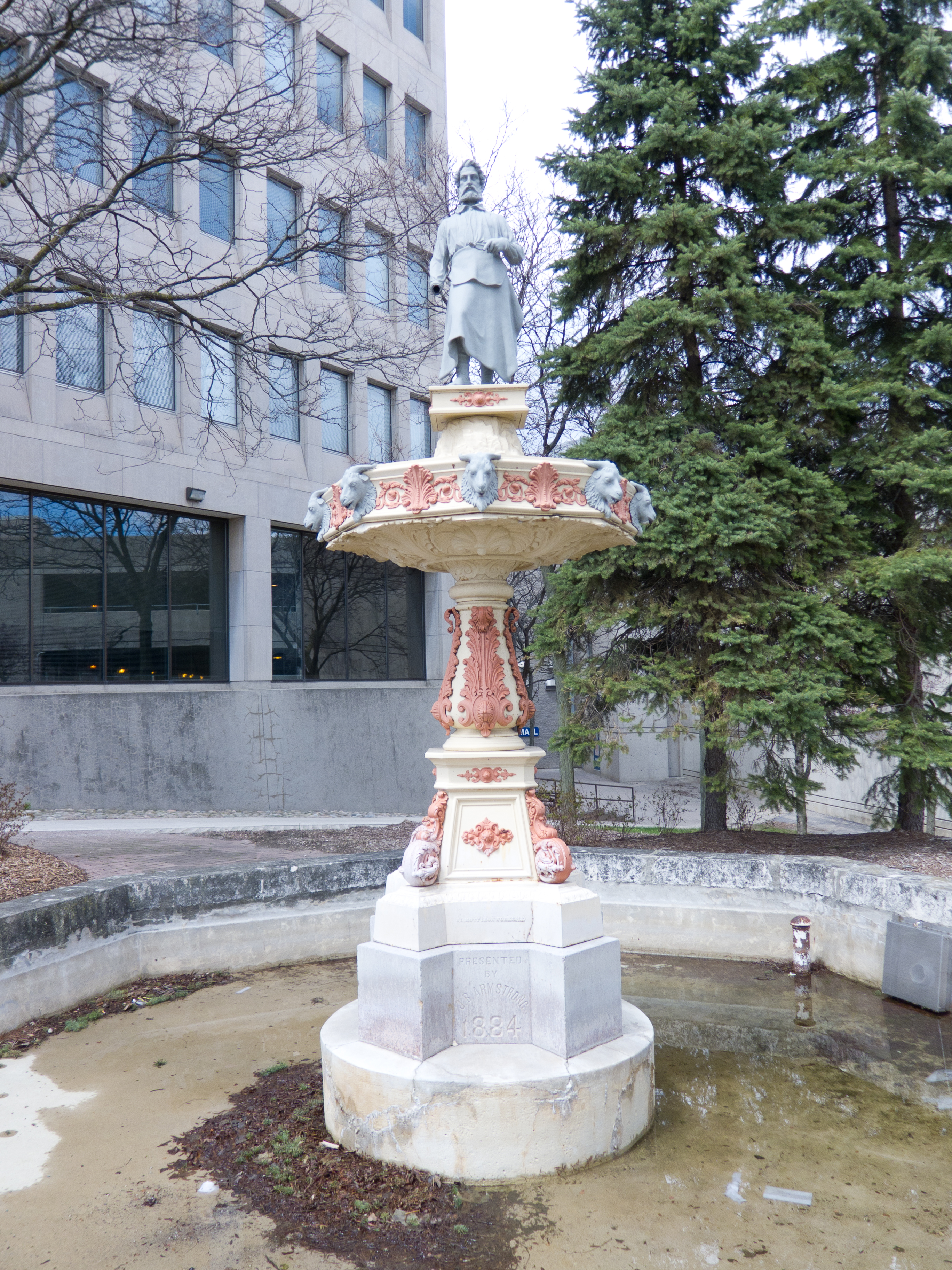
One of the more visible public acknowledgements of the craft's role in Canadian history is the blacksmith statue in Guelph, Ontario. Guelph was founded in 1827 by John Galt for the Canada Company, and its early industrial character included several ironworking establishments that supplied the surrounding agricultural region.
What Remains Accessible Today
For those interested in observing or documenting working traditional blacksmithing in Canada, several heritage sites maintain active forging demonstrations:
- Barkerville Historic Town, BC — seasonal demonstrations, period equipment, Cariboo Gold Rush context.
- Forges du Saint-Maurice National Historic Site, QC — the physical remains of one of North America's earliest iron-producing complexes.
- Upper Canada Village, ON — living history site with working smithy.
- Heritage Park Historical Village, Calgary, AB — includes a reconstructed blacksmith shop from the early settlement period.
- Kings Landing Historical Settlement, NB — demonstrates nineteenth-century Atlantic Canadian craft trades including ironwork.
Operating hours and demonstration schedules vary by season; checking individual sites directly before visiting is advisable.
References
- Parks Canada. Forges du Saint-Maurice National Historic Site. pc.gc.ca
- Canadian Conservation Institute. canada.ca/en/conservation-institute
- Artist Blacksmith Association of North America (ABANA). abana.ca
- Wikimedia Commons. commons.wikimedia.org — image sources.
- BC Heritage. Barkerville Historic Town. barkerville.ca